Design Best Practices for VMware vSphere 4.1 and NetApp or EMC Storage

Design Best Practices for VMware vSphere 4.1 and NetApp or EMC Storage

VMware
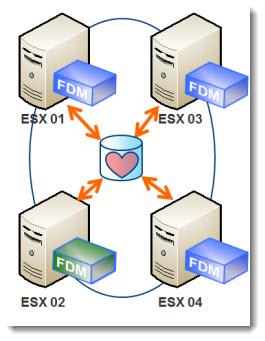
Best Practices for VMware and Storage The best flexibility comes from a combination of VMFS and NFS Use NetApp or EMC vCenter plug-ins to automate your storage vendor best practices Use Multiple NFS datastores and 10GbE ( 1GbE requires more complexity to address I/O scaling due to one data session per connection with NFSv3) Avoid RDMs, use VMFS pools or NFS pools Make the VMFS and NFS datastores big Use SIOC if you have vSphere 4.1 or later ( Even if you do not use shares, it will ensure no VM swamps the others) Exception: Create planned datasore designs rather than having big pools for larger IO use cases. Oracle, Exchange, SAP etc.  
Read More
Tech Support Mode has been disabled by the Administrator on ESXi 4.1

Tech Support Mode has been disabled by the Administrator on ESXi 4.1

VMware
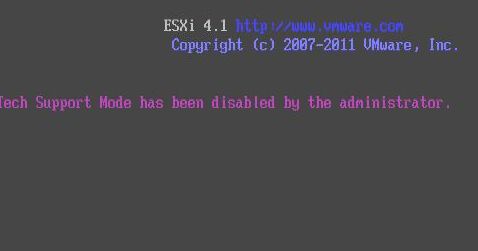
Tech Support Mode (TSM) provides a command-line interface that can be used by the administrator to troubleshoot and correct abnormal conditions on VMware ESXi hosts. To access the local TSM: At the main DCUI screen, press ALT+F1 simultaneously. This opens a virtual console window to the host. Provide credentials when prompted.Note: When typing the password, characters are not displayed on the console. Tech Support Mode has been disabled by the Administrator on ESXi 4.1 If " Local Tech Support " daemon does not running, you get " Tech Support Mode has been disabled by the Administrator " when accessing to the local TSM. To enable local TSM from the vSphere Client: Select the host and click the Configuration tab. Click Security profile > Properties. Click Local Tech Support and click…
Read More
How to Install VMware vSphere vCenter Server 5.1.0b on Windows Server 2003 R2 X64 SP2

How to Install VMware vSphere vCenter Server 5.1.0b on Windows Server 2003 R2 X64 SP2

Video Tutorials, vSphere
One of most important components of the vSphere environment is vCenter Server. vCenter Server acts as a central management point for managing ESXi hosts. In this video we will install VMware vSphere vCenter Server 5.1.0b using the Simple Install method on Windows Server 2003 R2 X64 SP2. Minimum requirements for the vCenter server Processor: Intel or AMD x86 processor with two or more logical cores, each with a speed of at least 2GHz. Memory: 4GB RAM. RAM requirements may be higher if your database runs on the same machine. Disk storage: 4GB. Disk requirements may be higher if the vCenter Server database runs on the same machine. Supported operating systems Microsoft Windows Server 2003 SP2 64bit Microsoft Windows Server 2003 SP2 64bit Microsoft Windows Server 2008 SP2 64bit Microsoft Windows…
Read More
When working in Iomega ix4-200d StorCenter Manager, I occasionally get a “Page cannot be displayed” error, or the page does not show updated information

When working in Iomega ix4-200d StorCenter Manager, I occasionally get a “Page cannot be displayed” error, or the page does not show updated information

Storage
This is an issue with Internet Explorer's default caching of web pages. To resolve this issue, set Internet Explorer to always update the page: 1- Open Internet Explorer. 2- Select Tools and then Internet Options. 3- Under Temporary Internet Files, select the Settings button. 4- Set the default action for "Check for newer versions of stored pages:" to "Every visit to the page". 5- Select OK, then OK again.
Read More

Microsoft Excel Password Recovery Instructions with Office Password Recovery Utility

Office
Often when an employee departs, they take important Excel passwords with them. This guide outlines how to use a simple Excel password recovery application to crack lost or forgotten passwords, allowing you to unlock password-encrypted Microsoft Excel documents quickly as possible. To perform the following recovery steps, you'll need to get the download of Office Password Recovery, available directly here. (2.1Mb). Once you've downloaded the program, run the install with the default options. 1- Click the Open button on the top left, navigate to the protected spreadsheet file. 2- The Open button launches the Recovery Wizard. The Wizard gives you the option of simply decrypting the spreadsheet or displaying the original document password.   Recovery Option 1: 100% Instant Document Decryption This option is the quickest way to access your…
Read More
Exchange 2010 Event ID: 4113 MSExchangeRepl Database redundancy health check failed

Exchange 2010 Event ID: 4113 MSExchangeRepl Database redundancy health check failed

Exchange Server
If you are using Database Availability Group (DAG), Microsoft Exchange Replication service monitors database redundancy by calling CheckDatabaseRedundancy.ps1 script in default script folder. It ensures that each replicated database has at least two copies and a healthy copy to make it redundant. CheckDatabaseRedundancy.ps1 script is run hourly by the Microsoft Exchange Replication service to perform a redundancy health check for replicated databases . If Exchange finds that a replicated database doesn?t have sufficient healthy copies, the Microsoft Exchange Replication Service - MSExchangeRepl - logs an event id: 4113 (Error: MSExchangeRepl Database redundancy health check failed) as shown below. The information captured in the event reports that only one copy exists, which is what I expected. The Replication Service will continue to check and log event 4113 for the database every twenty…
Read More
Installing Debian 7.0 Wheezy in VMware Workstation 9

Installing Debian 7.0 Wheezy in VMware Workstation 9

Linux, Video Tutorials
Debian is the most stable and popular non-commercial Linux distribution. It is maintained by a global community of over 1,200 registered developers dedicated to improving and enhancing its functionality. So, new versions of Debian are released only when they are ready. The package management tools in Debian are so well-developed that even commercial Linux distributions such as Red Hat have implemented Debian's technology to handle their packages. Related Video: https://www.youtube.com/watch?v=CdzIzCckr2A Hope you found it informative and useful.Any questions or comments are welcomed.
Read More

How to Install Service Pack in Windows Server Failover Cluster for Windows 2008 R2, Windows 2008 and Windows 2003

Windows Server
The process of applying a service pack to a server failover cluster is almost the same as applying it to Windows 2008 R2, Windows 2008 and Windows 2003. You can install Windows service packs on Windows Server Failover Cluster nodes using the following procedure. Always install the same service packs or hotfixes to each node. Use this procedure to install the service packs unless otherwise directed by a particular service pack version. Open Failover Cluster Manager, and then click Nodes then right-click Node A, and then click Pause. Expand Node A. In the right pane, right-click each Services or applications and then click Move this service or application to another node to move them to Node B. Install the service pack on Node A, and then restart the Node A. In Failover Cluster Manager, right-click Node A,…
Read More
VMware vCenter Server 5.1 Update 1 and ESXi 5.1 Update 1 Released

VMware vCenter Server 5.1 Update 1 and ESXi 5.1 Update 1 Released

vSphere
[caption id="attachment_561" align="alignnone" width="303"] VMware vSphere 5.1 Update 1[/caption]   April 25th, VMware released vCenter Server 5.1 Update 1 and ESXi 5.1 Update 1. This release offers the following improvements: vCenter Server is now supported on Windows Server 2012 Additional vCenter Server Database Support: Microsoft SQL Server 2012 Microsoft SQL Server 2008 R2 SP2 Additional Guest Operating System Customization Support: Windows 8 Windows Server 2012 Ubuntu12.04 RHEL 5.9 Resolved Issues: This release delivers a number of bug fixes that have been documented in the Resolved Issues section in release notes. All new vSphere features are available only through the vSphere Web Client.  vSphere Client will continue to operate,  but not exposing any of the new features in vSphere 5.1. vSphere 5.1 and its subsequent update and patch releases are the…
Read More