How to Reset Password in Ubuntu

How to Reset Password in Ubuntu

Linux
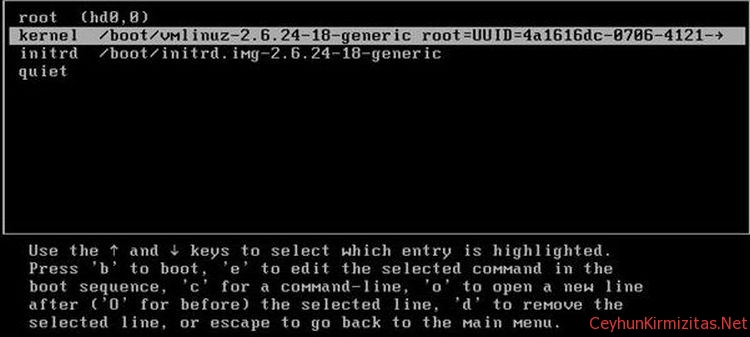
Applies to: Ubuntu 26.04 LTS / 24.04 LTS / 22.04 LTS / 20.04 LTS / 18.04 LTS / 16.04 LTS If you forget the password for a local Ubuntu account, you can reset it from recovery mode as long as you have access to the machine and the disk can be unlocked. The original version of this article used an old GRUB method that edited the kernel line and added rw init=/bin/bash. That approach can still work in some cases, but Ubuntu now provides a cleaner recovery-mode path that is easier to follow and less error-prone. In This Article 1. Before You Start 2. Boot Ubuntu into Recovery Mode 3. Remount the Root Filesystem 4. Reset the User Password 5. Reboot and Test 6. Full Disk Encryption 7. Key Takeaways…
Read More
How to Manage Swap Partitions on RHEL, Rocky Linux, AlmaLinux, and CentOS

How to Manage Swap Partitions on RHEL, Rocky Linux, AlmaLinux, and CentOS

Linux
Applies to: RHEL-family Linux — RHEL 6–10 / Rocky Linux 8–10 / AlmaLinux 8–10 / CentOS 6–8 / CentOS Stream 8–10 Linux can use swap when physical memory is under pressure. Swap can be provided by a dedicated partition, an LVM logical volume, or a swap file. The original version of this article was written for RHEL 6 and CentOS 6. The same core swap-management commands are also used on current RHEL, Rocky Linux, AlmaLinux, and CentOS releases, so the procedure below has been updated while keeping the older versions in scope. In This Article 1. Check Current Swap Space 2. Create a Swap Partition 3. Initialize the Partition as Swap 4. Add the Swap Partition to /etc/fstab 5. Activate and Verify Swap 6. Key Takeaways 1. Check Current Swap…
Read More
How to Configure a Secondary BIND DNS Server on RHEL-Family Linux

How to Configure a Secondary BIND DNS Server on RHEL-Family Linux

Linux
Applies to: RHEL-family Linux — RHEL 6–10 / Rocky Linux 8–10 / AlmaLinux 8–10 / CentOS 6–8 / CentOS Stream 8–10 A secondary BIND DNS server keeps an authoritative copy of a DNS zone by transferring it from the primary server. If the primary DNS server is unavailable, clients can still query the secondary server for the zone. The original version of this article used the older master/slave terminology. Current BIND documentation prefers primary/secondary, although the older configuration keywords are still supported and remain useful for compatibility with older RHEL releases. In This Article 1. Configure the Primary Server 2. Install BIND on the Secondary Server 3. Configure the Secondary Zone 4. Start BIND and Open the Firewall 5. Validate the Zone Transfer 6. Current BIND Terminology 7. Key Takeaways…
Read More
How to Enable TLS for VSFTPD on RHEL-Family Linux

How to Enable TLS for VSFTPD on RHEL-Family Linux

Linux
Applies to: RHEL-family Linux — RHEL 6–10 / Rocky Linux 8–10 / AlmaLinux 8–10 / CentOS 6–8 / CentOS Stream 8–10 Traditional FTP sends usernames, passwords, and file data without encryption. If you still need to run vsftpd, you can protect the connection with TLS and use FTPS instead of plain FTP. Current guidance: For new deployments, prefer SFTP over OpenSSH where possible. Red Hat has deprecated FTP client and server software, including vsftpd, in RHEL 10 and recommends moving new workflows to SFTP or WebDAV. FTPS and SFTP are different protocols. FTPS is FTP protected with TLS. SFTP is the SSH File Transfer Protocol and does not use vsftpd. In This Article 1. Install VSFTPD 2. Prepare the TLS Certificate 3. Configure VSFTPD for TLS 4. Restart VSFTPD 5.…
Read More
Common Linux Network Troubleshooting Commands

Common Linux Network Troubleshooting Commands

Linux
Applies to: RHEL-family Linux — RHEL 6–10 / Rocky Linux 8–10 / AlmaLinux 8–10 / CentOS 6–8 / CentOS Stream 8–10 Linux includes a small set of command-line tools that can quickly answer the most common network troubleshooting questions: Is the interface up? Is there a route? Is the remote host reachable? Is the port listening? Is DNS resolving correctly? The original version of this article used tools such as netstat, arp, and telnet. Those commands are still useful in older environments, but current RHEL-family systems primarily use ip, ss, ip neigh, nmcli, and tools such as nc or curl. In This Article 1. IP Address and Interface Status 2. Routing 3. Reachability 4. Listening Ports and Connections 5. Test a Remote Port 6. DNS Lookups 7. Neighbor Cache 8.…
Read More