Applies to: Exchange Server SE / 2019 / 2016 | Exchange Online | Hybrid
In Exchange Hybrid environments, shared calendar behavior after mailbox migration is often misunderstood. Calendar access does not automatically fail when a mailbox moves to Exchange Online, but the result depends on the permission type, how it was assigned, and the hybrid configuration. This article walks through a controlled test and shows the behavior observed before and after the move.
In This Article
- 1. Scenario
- 2. Step 1 – Test Default Behavior (On-Prem → On-Prem)
- 3. Step 2 – Check Existing Permissions
- 4. Step 3 – Assign Explicit Permission
- 5. Step 4 – Verify Access
- 6. Step 5 – Migrate Mailbox to Exchange Online
- 7. Step 6 – Test After Migration (Both Directions)
- 8. What This Test Demonstrated
- 9. If Calendar Access Fails After the Move
- 10. Key Takeaways
1. Scenario
We use two users:
buser01@onpremx.combmuser01@onpremx.com
Initial state:
- Both mailboxes are on on-prem Exchange
- Users can access each other’s calendars
2. Step 1 – Test Default Behavior (On-Prem → On-Prem)
Without assigning any permissions:
- Add calendar in Outlook
- Calendar is added successfully
- Only free/busy information is visible
- No subject or details
This is expected.
In this test, the Default calendar permission was:
AvailabilityOnly3. Step 2 – Check Existing Permissions
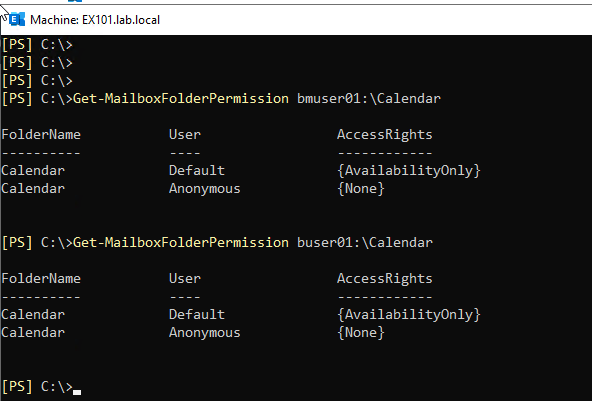
Verify current permissions:
Get-MailboxFolderPermission bmuser01:\Calendar
Get-MailboxFolderPermission buser01:\CalendarTypical result:
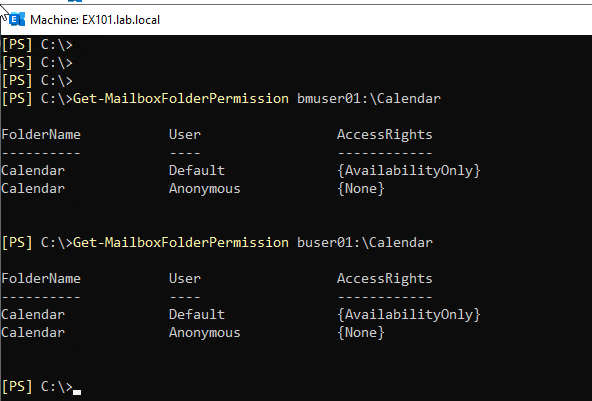
No explicit user permissions are configured.
4. Step 3 – Assign Explicit Permission
Grant Reviewer access:
Add-MailboxFolderPermission bmuser01:\Calendar -User buser01 -AccessRights Reviewer

Add-MailboxFolderPermission buser01:\Calendar -User bmuser01 -AccessRights Reviewer5. Step 4 – Verify Access
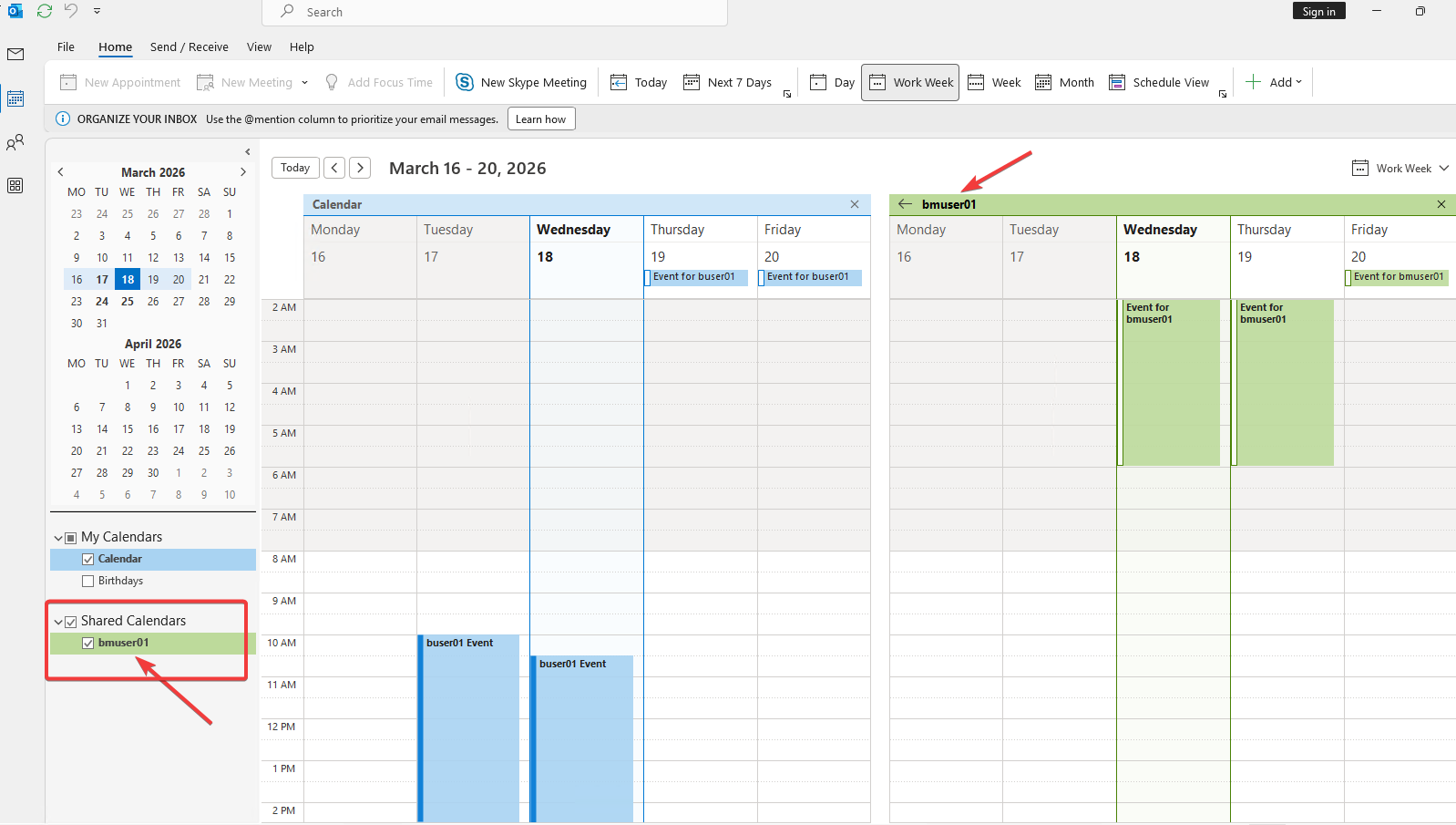
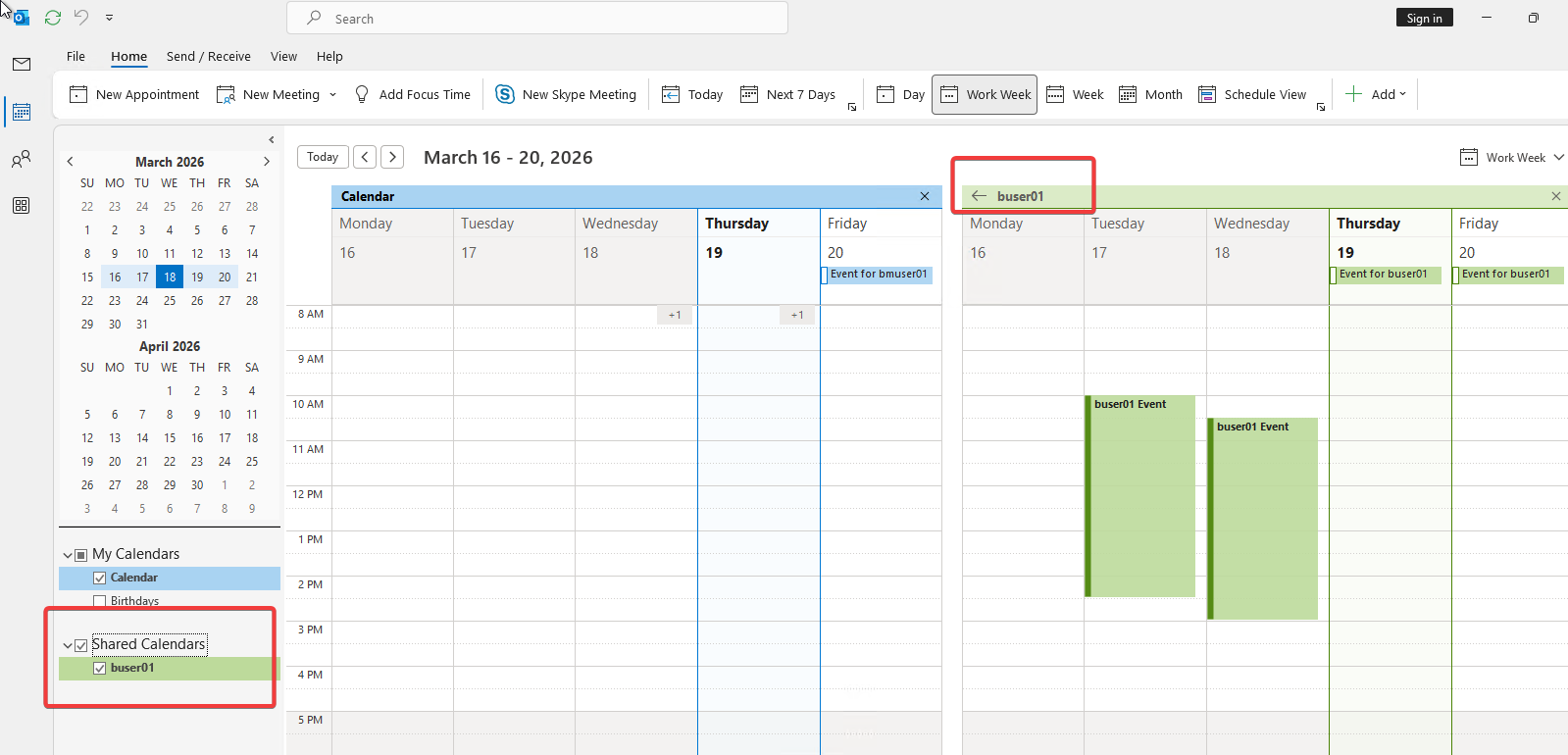
After assigning permission:
- Calendar opens successfully
- Subject and details are visible
6. Step 5 – Migrate Mailbox to Exchange Online
Move bmuser01 to Exchange Online using Hybrid migration (batch or remote move).
After migration:
- buser01 → on-prem
- bmuser01 → Exchange Online
7. Step 6 – Test After Migration (Both Directions)
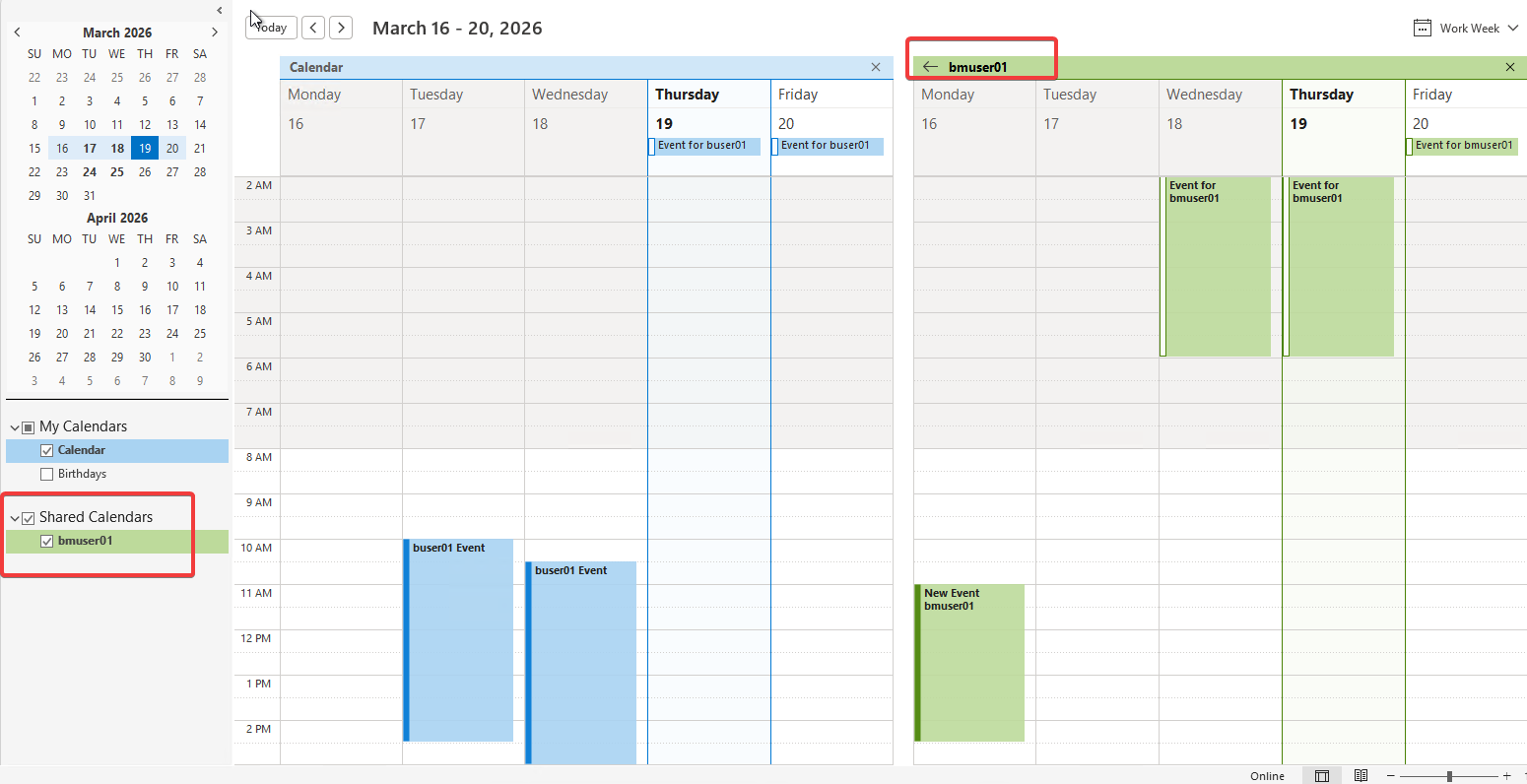
After the migration, test calendar access from both sides.
7.1 Test 1 – On-Prem → Exchange Online
User: buser01 (on-prem)
Target: bmuser01 (Exchange Online)
- Add calendar from Outlook
- Calendar opens successfully
- Full details are visible
7.2 Test 2 – Exchange Online → On-Prem
User: bmuser01 (Exchange Online)
Target: buser01 (on-prem)
- Add calendar from Outlook or OWA
- Calendar opens successfully
- Full details are visible
8. What This Test Demonstrated
The important distinction in this test is between free/busy visibility provided by the Default calendar permission and an explicit folder permission. In this environment, the Default entry was AvailabilityOnly, so only free/busy information was visible. After explicit Reviewer permissions were assigned, both users could see calendar details.
- The explicit Reviewer permissions were configured before the mailbox move.
- After bmuser01 moved to Exchange Online, the on-premises user could still open that calendar with details.
- The Exchange Online user could also open the remaining on-premises user’s calendar with details.
- No calendar permission had to be recreated for this controlled migration test.
This is the result observed in the specific Exchange Hybrid scenario tested above, not a guarantee for every cross-premises calendar configuration. Microsoft documents limitations for mailbox and folder permissions in hybrid environments and recommends moving mailboxes that participate in folder-permission relationships together. If access fails after a move, verify the folder permission itself and the failing cross-premises direction before recreating permissions.
9. If Calendar Access Fails After the Move
Before removing and recreating calendar permissions, I would first confirm what actually changed. Start by checking the folder permission on the calendar and compare it with the permission level that existed before migration.
Get-MailboxFolderPermission user@contoso.com:\Calendar- Confirm whether the expected user is still listed on the Calendar folder.
- Distinguish default
AvailabilityOnlyfree/busy visibility from an explicit permission such asReviewer. - Test access in both directions when one mailbox is in Exchange Online and the other remains on-premises.
- Only recreate the permission after confirming that the existing folder permission is missing or incorrect.
This keeps a migration-related access problem from being mistaken for a permission problem without evidence.
10. Key Takeaways
- In this controlled test, the explicit
Reviewercalendar permissions continued to work after one mailbox was moved to Exchange Online. - Explicit folder permissions can migrate with a mailbox, but cross-premises permission behavior has documented limitations and should not be treated as universally supported in every topology.
- If calendar access fails after a move, verify the existing folder permission and the affected cross-premises direction before removing and recreating permissions.
References
- Permissions in Exchange hybrid deployments – Microsoft Learn
- Exchange Server hybrid deployments – Microsoft Learn
- Add-MailboxFolderPermission – Microsoft Learn

Cloud and infrastructure professional with nearly two decades of experience in enterprise IT environments, spanning public cloud, private cloud, and hybrid architectures.